Recent Posts

Top 10 Best Soundproof Curtains on the Market Today!


Do you live in a busy metropolitan area? Or maybe somewhere you can hear highway traffic or barking dogs during the run of a day? If that’s the case, then this article is for you. Here are our top ten best soundproof curtains you can buy today!

What are the Best Soundproof Curtains? The best soundproof curtains are the NICETOWN Full Shading Curtains. Out of the Top ten on our list, the NICETOWN came in the first place because of its soundproofing capabilities due to its substantial thickness and its weight at 7.39 pounds.

I used to live in an area where our neighbors had a loud barking dog that would drive us crazy. They also had a four-wheeler that would drive around their house over and over again. It was our first house and a little bit in the boonies. Needless to say, we bought our very first set of soundproof curtains.

The first set of soundproofing curtains we purchased were from Nicetown. I would be lying if I told you the exact curtains from that company they were because I don’t remember. They stayed in the house after we sold and moved away.

Not only did I notice that my new soundproof curtains were excellent at blocking noise from outside but they were also great at absorbing the echo inside the room. They act like a huge sound absorber panel. Some people actually do buy soundproof curtains or even moving blankets when building a recording studio to muffle out all the echoes.

The third positive about these thick curtains is that they also help keep the energy bills low because they block up to 90% of the sun and leaves the heat outside. They also leave the cold outdoors in the winter and keeps your home warm and cozy.

Another good asset when blocking the sun is that they also protect your furniture and wood floors from prematurely fading by blocking not only the sun but also the harmful UV rays.

Soundproofing Curtains
Soundproofing Curtains Example of What They Can Do!

Important Things to Consider When Choosing Soundproof Curtains

Dimensions of the Sound Absorbing Curtains

One of the first thing to always make sure before purchasing a set of sound-absorbing curtains is to make sure you buy the right size curtains. Measure your window or door and look up the dimensions of the curtains to make sure they will not only fit but will also extend at least six inches on each side, the top and bottom.

Having a soundproof curtain that is a bit larger than the glass you’re hoping to soundproof is important because you do not want any noise to be leaking in from the sides.

One suggestion that I always give when someone is looking at installing soundproof drapes is to have them go down all the way to the floor. Usually, you see this type of style in curtains made of velvet. When they sit on the floor, it will leave less room for noise to leach out.

Sometimes people would even go from floor to ceiling, but this is only practical over a larger window. You want the curtains to help reduce noise in a room, but at the same time, you also want them to look good. They might not look that great if you go floor to ceiling over a tiny window. You just need to find that balance.

Factor In the Weight to Find the Best Soundproofing Curtains

Another critical factor in finding the best soundproofing curtains is their mass. Let’s face it, the heavier they are, the better they will be in noise reduction, its simple physics.

Of course, The weight of the curtains are not the only factor to put importance in, but it is a factor none the less. You will find in our top 10 list that they all have different weights.

Another thing you will notice is that my number one pick is the ones that are the heaviest, and by a fair amount compared to its competition.

You will notice how much heavier sound-absorbing curtains are versus traditional curtains when you’re in the process of installing them. Be careful if you’re going to be using a ladder and ask for help if there is some available.

Also, it’s critical that the soundproof curtains have multiple layers, some on our list has three layers (lining). The different liners would include window liners, curtain liners, and the popular blackout liner. All of these layers makes it much more challenging for noise to come into your home.

Choosing the Right Material is Key
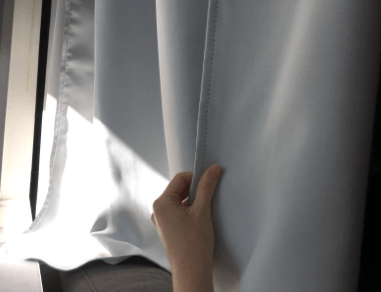
Material for the Best Noise Reduction.
Selecting the Right Material for the Best Noise Reduction.

Your best bet in finding the right type of noise absorbing curtains is to look for something made from suede or velvet. These types of material will most likely have extra fibers which will help in noise reduction.

Another way to look for material with extra fibers are curtains that are labeled as thermal weave and thermal layer.

What’s great with thermal layered and thermal weaved curtains is that it not only help in absorbing sound but they also lower your energy cost. They will eventually pay for themselves because they are more capable of keeping your home warm by not letting heat escape your home during the cold winter months.

They will also help keep your home cool in the summer months by effectively blocking out the sun from glaring inside the house.

By keeping the sunrays from coming inside on a bright day, you will also keep the UV rays off your floors and furniture. Keeping the sunlight off wood will keep your furniture and flooring from prematurely fading.

Keeping the sun and sound from entering the home can also dramatically increase or decrease depending on the color of the soundproof drapes. The darker the color, the more efficient they will be in blocking noise and sun.

If you decide to go with white curtains they won’t be as good regarding noise reduction; they certainly will not blackout a room.

One final tip regarding the curtains material is that you should look for information where it says “easy to wash.” You will want your curtains to be durable enough to be machine washable. What’s the point of paying extra for sound absorbing curtains when you have to bring them to a dry cleaner and spend even more money.

When they are labeled as machine washable, they tend to more durable for the long term and will have fewer chances of fraying.

Have the Right Hardware Before Installation

When talking about hardware, I’m referring to the curtain rods, the hooks holding the rod and the grommets.

Let’s begin with the curtain rod. You are going to want a heavy and strong curtain rod so you’re sure it can withstand the extra weight of soundproof curtains. Factor in the hooks that will be holding the rod because now the hooks will have to hold onto them a lot of extra weight; so make sure you buy the right hardware.

You can also opt for double rods. Using double rods will allow you to have two sets of soundproof curtains simultaneously. Doubling the curtains will certainly have a much greater noise reduction capabilities.

Another important piece of hardware to consider when choosing sound deadening curtains are the grommets. Having string steel grommets attached to the soundproof curtains will make it much easier to slide the curtain rod into place and will also be stronger in holding the added weight.

Most types of Curtains at this price point will likely have steel grommets, Especially if they are heavy curtains. Take a quick glance at the specifications to make sure everything checks out.

Ceiling mount brackets are also something to look into if you’re installing floor to ceiling curtains. If you want your sound deadening curtains to hang directly from the ceiling, you will want to make sure to look for ceiling hooks that can accommodate the extra weight.

Top 10 Best Sound Absorbing Curtains

Here is our top 10 list of best sound-absorbing curtains that you can buy today. All the links will be included in the article.

Nicetown Full Shading Soundproof Curtains

When it comes to soundproof curtains, no one seems to do things quite the same way as NICETOWN, who offers curtains in a wide range of designs and prices.

One of their greatest and most pricey, collection of soundproof curtains are their Full-shading design.

Coming in tones of white, black, and gray as well as different sizes, and they block out nearly 100% of all outside light.

But you’ve come here for the soundproofing abilities of these curtains and not necessarily how much light they can block, correct?

Well, you will be glad to know that these curtains can do that just as well as they prevent light from coming inside your home, with outside noise muted almost to the point of it being mute. This is because of the design of the curtains, which enables them to drape evenly around most windows and absorb the noise.

As said before, this is one of the more costly curtains that you can buy from NICETOWN, with a price tag around the 50 dollar mark, so you will want to make sure that these curtains can fit within your budget before you buy them.

Notwithstanding the price, the material also seems susceptive to damage, with some users insisting that they get stained and ripped easily.

While this is not good, the positives of these curtains from NICETOWN far exceed the negatives and make this a purchase worth it.

No curtain out there gives you quite as much light and sound blocking capabilities as the NICETOWN Full-shading curtains, making your home as calm as you could want it. Click here for current Price of the Nicetown full-shading curtains (Amazon).

H.Versailtex Premier Blackout Wider Curtains

H.Versailtex Premier Wider Curtains
H.Versailtex Premier Blackout Wider Curtains

The H.versailtex Premier curtains are heavy duty and quite durable. They are made especially for larger windows and patio doors. With a size of 100×108, these large curtains are intended to cover as glass surface as possible to keep light, heat, and especially noise from coming inside your house.

H.Versailtex blackout curtains are more of a “room darkening” curtain that a “blackout” curtain. But that is what I would want anyway. I do not want to feel like I am stuck in an isolation tank within my own home at three in the afternoon.

Notwithstanding their substantial size, these curtains are straightforward to install. While the extra weight could be a bit of a challenge to lift by yourself, the well-designed and robust steel grommet rings will effortlessly glide the curtain rod into place.

Sure, they might be a little more pricey when you begin to compare them with some of the other sound-absorbing curtains, but in the end, you get what you pay for, and you should not be disappointed. The H. Versailtex Premium Blackout Curtains are a sturdy and heavy curtain that is sure to draw warmth and charm to any home!

They are currently rated very high on Amazon with people boasting about the quality of the material, noise reduction and also how good they are concerning temperature control.

Click the link for more information and pricing of the H.versailtex from Amazon.

H. Versailtex Classic Grommet Curtains

H.VERSAILTEX Room Darkening curtains
H.VERSAILTEX Room Darkening Thermal Insulated Curtains.

Here is yet another excellent option from H.Versailtex with their Classic heavyweight noise reduction curtains. These curtains offer a more classic look (hence the name) with the little plaid textured material. They look flat from afar but looking closer you will see the beautiful texture throughout the drapes.

The H.Versailtex classic curtains are very easy to care for because they are machine washable and use only non-chlorine bleach when needed, tumble dry low and warm iron as needed also.

What’s great regarding these sound absorbing curtains is that you have an 8-year warranty. That alone should give you peace of mind in the sense that some people are hesitant to wash drapes in the washing machine because of the risk of damage. At least if you notice these curtains becoming frayed, then you can simply return them for a new set.

At 52×108 inches in size, they are a good size to cover large surfaces of glass and will provide good noise reduction. They will also provide you with an 85% light reduction from coming inside your home, protecting your furniture and lowering your energy cost at the same time.

Click the link for more information and pricing on the H. Versailtex Classic Curtains (Amazon).

Deconovo Blackout Drapes

The Deconovo Blackout Drape claims to be able to block 100% of sunlight. Nothing 100% but this is as close as it gets to complete darkness. They claim 40% of noise reduction, and that is reasonably accurate. If you install a good set of blinds with these curtains, you’ll definitely have won the battle on outside noise.

These noise reduction curtains are a bit different from the other ones on this list because the Deconovo Blackout Drapes only has one drape per pack. Don’t worry that does not mean that you will have to pay for a second set because you will just need one of these noise-reducing curtains.

The Deconovo drapes are quite big coming at 100X95 inches in size. At this size, they will be doing what a duel panel curtain set would accomplish.

What makes having only one curtain instead of two is that there is no separation in the center where light and noise could come through.

One thing to note about lighting is color. Deconovo Drapes comes in many colors so the darker the curtain, the darker the room will be during the daytime.

They do have beautiful colors, alongside the typical black, grey and white they have an array of colors that span from rich blues to bright orange. So they are certainly a great choice for someone looking for a more funky decor with these sound absorbing curtains.

Another critical thing to mention about these soundproof curtains is their thermal protection capabilities. If you read just some of the Amazon reviews, you will quickly realize how serious I am when I tell you that they are wonderful for keeping the heat inside your home and keeping the cold outside.

The majority of people buying these curtains are very pleased with the eco-friendliness they are by saving them some money on their power bill and leaving their house warm and comfortable.

Click here for the current price of the Doconovo’s from Amazon.

Sideli Solid Velvet Curtains

Sideli red Soundproof Curtains
Sideli Soundproof Curtains / Photo Alibaba.

Next up on our list of best soundproof curtains are the Sideli Solid Velvet Curtains. I personally have never tried these curtains but I’ve done enough research on a few message boards on Reddit and by reading the Amazon reviews feel confident enough to add these on this list.

These sound absorbing curtains have a lot going for them because they indeed give you enough options to suit almost anyone. The curtains come in various size, colors, and style, especially when you compare them with other soundproofing blanket manufacturers that would only have a white and black option. At least these curtains will satisfy people that would want a more specific style and color to match their decor.

Something the Sideli curtains has that most others do not is that they are made of velvet. Velvet is one of the best material when you want a soundproofing element. The reason for this is because the velvet in these drapes has many fiber layers. Of course, the more layers you have, the more noise will be kept on the other side of the curtains.

The numbers of velvet layers will also block up to 90% of light, but as I’ve mentioned multiple times, you will get different results if you buy the white versus the dark red curtains. The darker they are, well you know the rest by now.

There is only one issue that a few people did mention on the Reddit boards is that they found them to be medium weight. So if your primary reason for buying these soundproof curtains is to help soundproof your home, then you should probably ignore these drapes altogether. There are heavier curtains on this list that will be better in the noise reduction department.

If you are however looking for a set of curtains that is more of a “jack of all trades,” then these are for you because they are good in all aspects, just not perfect.

The reviews on Amazon are very good with mostly five-star ratings. People boast about the quality and the texture and how soft the velvet feels.

Some reviewers do mention the fact that they found it difficult to get rid of the wrinkles. They are dry clean recommended because of the softer material, but you would be fine washing them home but make sure that you have ALL your settings on delicate. Some tried a portable steamer which worked for some to an extent. Either way, the wrinkles will disappear, so it should not be too much of a worry.

Click here for current price on the Sedeli Solid Velvet Curtains from Amazon.

NICETOWN Three-pass Microfiber Curtains

Nicetown Three pass sound absorbing curtains
Nicetown Three pass sound-absorbing curtains / Photo from Alibaba

Another set of noise blocking curtains from Nicetown. You shouldn’t be surprised really because you will most likely find at least one set of curtains from Nicetown if you’re looking for the best soundproofing curtains.

The type of material these curtains are made from does an excellent job in blocking light, noise and heat (or cold if you’re north and it’s winter). These Nicetown are made from a heavy microfiber that is interwoven by top fabric layer, high-density black yarn, and a back fabric layer making a high-quality triple weave.

Like most of the other soundproofing curtains on this list, they will most likely pay for themselves eventually; since they are energy efficient through balancing room temperature by leaving the winter chills and the summer heat outdoors where it belongs!

What some people never think about when buying curtains are the UV rays and how the sunlight could damage their furniture over time. These noise reduction curtains will do the trick in protecting your furniture.

The blackout effect will keep out at least 90% of the light, and if you opt for a darker curtain, you will see an even higher percentage of darkness. I was also surprised by how much light the white drapes was blocking during peak daylight. Check out the pictures below showing you how the white and the black performs at preventing the sunlight from coming into the home.

These curtains are very easy to maintain because they do not need any special care when washing them or whatever. You can simply throw them in the washing machine and done.

Click the link for the current Amazon price on the Nicetown Three Pass Sound Absorbing Curtains.

Nicetown Red Velvet Curtains

Nicetown Red Velvet Curtains
Nicetown Velvet Noise Reduction Curtains / Photo Alibaba

I thought it would be a good idea to add a second set of velvet sound-absorbing curtains to this list. The one that I chose was Nicetown Red Velvet Curtains. You can buy these curtains in other colors than red; you will see if you follow the link below.

I’ve never personally tried these curtains but I know someone that has them in their home, and I asked them if they are doing a good job at soundproofing. They did not buy them for the noise reduction attributes so I asked if they could give it a try to see if there was a significant difference regarding noise coming from outside after the curtains were closed.

After a few days, I heard back from them, and they said that it doesn’t block the noise entirely but what it does is it muffles the noise of the cars passing in front of the house. That is actually what they are supposed to do, I wasn’t expecting them to mute the outdoors but at least help in soundproofing a room.

These curtains would work perfectly in conjunction with a good set of thick blinds. The velvet makes the curtains look good as they flow directly on the floor leaving no gaps on the bottom.

They advertise them as a blackout curtain, but they are not what I would consider as “blackout.” You could get some curtains that do a better job in that department. They will, however, work very well in temperature control of the room and help to keep your energy bills lower than perhaps other types of curtains.

I would not hesitate to recommend these soundproofing curtains by just reading the reviews on Amazon because you really have to dig deep to find a negative review.

Click here for current Amazon Pricing for these Nietown Velvet Curtains.

NICETOWN Blackout Curtain Panels

Nicetown Blackout Curtains
Nicetown Blackout Soundproof Curtains / Photo Alibaba

A common misconception regarding soundproof curtains is that they are usually more costly than conventional curtains.

While this is absolutely true in some circumstances there exist quite a few sets of curtains that do not hold true to this rule, Just like the NICETOWN Blackout Curtain Panels.

One of the biggest reason that there are over 5000 reviews on Amazon about these curtains is the price point. They are priced at around thirty dollars, directly competing with curtains that would not consider themselves “noise reduction curtains.”

The Nicetown Blackout Curtains does it all at this affordable price, cancel outside noise, cover the room in darkness and great for temperature control.

They come in a large variety of color but as you already know, if your primary reason for buying curtains is to help block out noise then you will have to go with a darker color.

The drapes are machine washable and easy to take care of and will also do a good job of protecting your furniture and wood flooring from sun damage.

At around thirty bucks, where could you go wrong? Click here for complete information and pricing from Amazon.

Warm Home Designs Thermal Blackout Curtains

Warm home design extra wide curtains
Warm home design Noise Reduction extra wide curtains / Photo Alibaba

The Warm Home Designs Thermal Blackout Curtains are much less popular than brands such as Nicetown, but that doesn’t mean that they are bad curtains, quite the contrary.

These curtains pack a lot of quality at a small price but there’s a catch, they only come with one single panel per package. So there is your compromise, instead of paying over forty dollars for a set of noise reduction curtains you can spend half that and get just one panel. That is not a bad thing if you only have a small window that you want to soundproof because you get high quality but in a smaller package.

These curtains would do an excellent job for smaller windows that could be found in dorm rooms or basement apartments where the windows are not as big as what you would typically have in a standard house.

There are only a handful of reviews on these curtains, but the majority of the people who have purchased them are very satisfied with the light blocking and noise reduction features.

If you’re fortunate enough only to need one panel then these would be a perfect solution for you and will also save you money down the road on your energy bills. They claim the block up to 99% of light, and that is accurate if you buy them in black. If you chose to go with a grey you will have approximately 80% light reduction, which is still suitable for a non-black color curtain.

Some people would think that only buying a single panel is a negative, but if you do buy two panels separately and one of them would become damaged down the road, you would only need to buy one panel and not be forced to purchase an entire replacement set of drapes. So there’s another positive.

I would certainly not hesitate in buying these curtains. Check the link for more information and pricing on the Warm Home Desing Thermal Blackout Curtains from Amazon.

Turquoize Full Blackout Soundproof Lined Curtain

Turquize Full Blackout Soundproof Curtains
Turquize Full Blackout Soundproof Curtains/photo Alibaba

And finally, The Turquoize Full Blackout Soundproof Lined Curtains is the final set of curtains on our list, and that certainly does not mean they are the worst ones on the list because they are not.  All ten sets of soundproof curtains on this list would be challenging to rate from one to ten because of their quality and effectiveness to block out unwanted noise.

What makes these curtains a bit different is the blackout liner on the inside. So basically this means that they might not be the best curtains if you want them on a window facing the front of your house.

If having a black lining is an issue then you can opt for the white curtains with a high shading white liner. These might not be as good for blocking the sun or regarding noise reduction, but they will still be an improvement over your standard drapes.

The black liner, however, works great to block out noise and sunlight. No UV rays will be damaging your furniture or flooring with these Turquoize curtains up.

The Turquoize Soundproof Lined Curtains are machine washable in cold water, gentle cycle, tumble dry, use iron on low heat to straighten and remove creases/wrinkles from packaging. They also come with a 5-year quality warranty and 30 days money back without risk return policy. So at least you can try them out for yourself and see if they work as good as you intended.

Click the link for complete information and pricing on the Turquoize soundproof lined curtains from Amazon.

Our Final Verdict

Our final verdict for the best soundproof curtains that you can buy today if as I mentioned above, the NICETOWN Full Shading Curtains. One thing to note however is that it really wasn’t hard to place the other nine noise reduction curtains on our top ten list. The hardest thing would be to rank them from one to ten and I will not even attempt to do that because they are all great noise reduction curtains in their own rights.

Soundproofing curtains will not completely block out the noise coming from outside but it is an easy place to begin your soundproofing project. In conjunction with a thick set of blinds (shades) between the window or patio door and the curtains and you will be even that much closer to resolving your noise problems.

Please let us know in the comment section below if you have any other suggestions that you might have at home that works well at soundproofing your window. Let us also know if you have had the chance to try any of the sound absorbing curtains on this list and what you think of their soundproofing capabilities.

Thank you for checking us out and hope to see you again soon! Subscribe to our YouTube channel for some awesome weekly soundproofing tips videos.


SaveSave

SaveSave

SaveSave

SaveSave

SaveSave

SaveSave

SaveSave

SaveSave

SaveSave

SaveSave

SaveSave

SaveSave

How to Stop Bass From Traveling Through Walls


Do you sometimes host parties and afraid the neighbors will feel the bass blasting from the music? I’ve never had this problem, but I do sometimes wonder if the people living next door can feel their house shake while Im watching an action movie. Either way, they’ve never said anything to me about it, but it is quite seldom that I have the house to myself to allow for this type of activity. In this article, I will explain to you how to stop bass from traveling through walls.

So the quick answer for how to stop bass from traveling through walls? Stopping bass from traveling through walls is a challenging task and can also be an expensive one if you want it done right. The answer is mass, a lot of mass. The thicker the insulation, the more bass will escape the house.

There are different ways to reduce the bass from either leaving your house or apartment.

What Is Bass?

Before you try to solve the problem about bass traveling through the entire house, you need to understand what bass is and also how it is created.

While the bass is merely the lower register, the feature of bass in tune can be somewhat different. As you understand the Bass guitar in modern-day popular music is typically the instrument utilized, Dual bass or Upright bass does much the same job in Jazz and specific other songs like folk or rockabilly.

Often the bass is a special keyboard on an organ. As well as the Bass is brought by guys with deeper voices in four-part consistency in a choir (Soprano, Alto, Tenor and also Bass are the four voices usually used).

Adjusting the Bass
Adjusting the Bass

Much of the time, the bass begins on the “root” note of the chord. A significant chord includes the origin, the third and also the fifth. The root is the first note of the crucial you remain in. Indeed there are numerous variations (inversions), however, if you pay attention very carefully, the bass player will certainly help define the chord by putting the root note available. Not always – no rules in music are hard and fast.

A Bass chord played on its own frequently sounds “muddy,” and also most bass expressions are taken from the chord and also played as respectfully notes (called arpeggios). Much better bass gamers than me might make whole melodic counterpoint sequences to the major tune of the tune, or they may play the first and the 5th. Or anything in between.

Bass in a song is the lower end of the audio, the reduced frequencies that exist in around 20 – 200Hz. The feeling of the bass is typically the driving force of the tune, pushing the track forward as well as locking in with the drums The expression “drop the bass” comes from digital songs, specifical dubstep at what is necessarily the carolers, where various other synthesizers are cut and also a bass synthesizer is played along with drums.

How to Reduce Subwoofer Vibration Through Walls

It is tough and can also be very costly to stop bass from traveling through walls because bass has a long wavelength that makes it easy to move throughout the house.

If you’re currently living in a duplex, condominium, townhouse or an apartment, then this information should be essential for you. The first thing you should understand what the problem actually is before buying a subwoofer. The problem is not how high or low the volume is, it is how much vibration is emitting from the sub.

The long wavelength that bass produces can travel through the floors, walls, and insulation. A high-frequency sound, however, will usually reflect back at you.

You should note that down-firing subwoofers should not be used under any circumstances, especially if you’re living in a shared space. A down-firing sub is the ones where the speaker directly points the soundwave towards the floor.

Here is a list of a few easy tricks you can do to help your situation.

1 – Move the Subwoofer Closer to You

The first tactic and of course the easiest one is to move the subwoofer closer to you so you can turn the subs volume down. Less volume means less vibration is coming from your subwoofer and this means less vibration that will emanate through your walls, floors, and ceiling.

What this will mean for you is that you will get an equally intense experience at a lower volume. You will still be able to feel the bass, but chances are your neighbors will not.

2 – Bass Traps

Installing bass traps on the corners of the wall will help. A bass trap is an acoustic foam that fits in the corner of the wall and comes out approximately six inches on each side, and they have ripples.

What you could do is move the subwoofer (easier if it is wireless) away from the walls and especially the corners because the vibration amplifies in those areas as it bounces off the wall. Of course, you will get a quieter experience by doing this, but at least you’ve reduced a bit of the bass. This method will not work if someone is living on the floor beneath you.

Click here to check out some good Bass Traps from Amazon.

3 – Buy a Buttkicker

Ok, so this method is only for people that want bass for their home theatre room or gaming room. By installing a Buttkicker, you can eliminate the bass but still have the vibrational effect when there is supposed to have bass in a movie or video game.

What a Buttkicker exactly is a small device that attaches underneath your chair or couch and produces vibration where the bass would happen in a movie, game or music.

Naturally, this trick is only for gamers and home theatre and not bass emitting from a party. Click the link ahead for more information and pricing for a Buttkicker mini from Amazon.

4 – Cinder Block Will Reduce Bass

This idea of stopping bass from traveling through walls comes from a Reddit forum, and it makes sense. Place the subwoofer on top of a cinder block will help in reducing bass because they are not resonant (like wood). The cinder blocks will also put an air gap between the subwoofer and the resonant material, like wood flooring and the drywall on your walls.

Basically what you would want is a plastic, metal, or concrete box with holes. If you don’t like the look of a cinder block, you could easily mask it with a stylish fabric cover.

5 – Concrete Tubbing

If you’re not fond of the cinderblock idea, you might like this idea. Place the speaker on a concrete form tubelike, cut to length and filled with sand.

The sand inside of the tube will give it substantial weight and also soak up the vibrations before they resonate through the floor. You could paint them or glue fabric on them and make it look pretty darn good.

6 – Adjust the Equalizer Frequency

Have you ever been to a house party and notice the bass quality grates on the ears? Well if you have this problem in your home, there is a quick fix to make the bass sound much better and also lower the vibration frequency. All you need to do is adjust one equalizer frequency, and you’re done. You might be surprised.

This certainly will not be a fix for every speaker out there, but it will help to fix the vast majority of the rasp and vibration. I don’t think this was intentional from the speaker manufacturers but with Beats by Dre out there, you never know.

Ok, now here is the fix; Turn down the 125hz slider on your equalizer a few dB to a point where it sounds good to the ears. The 125hz is for the most part where the boomy bass resides. This is more so for the midbass region but should give you a small head start on reducing vibrational bass from your subwoofer.

7 – Did you Adjust the Bass levels?

This is one step a lot of people seem to miss because it can be quite complicated for someone that has limited knowledge of how sound works. No worries because I have a quick two-minute fix that will help dampen bass coming through a wall.

  1. Crossover; The crossover is the frequency where the subwoofer begins to play the bass notes. The setting for the crossover would generally be where the speakers begin to roll off. This information should be in the speaker specs. You can also keep turning the crossover up until it rounds out the sound from your speakers. This can get much more complicated if you have a full surround sound home theatre, follow this link for specific instructions. 
  2. Gain; The gain (volume) is the crucial part, but it is also the simplest. Begin by playing a song and turn the subwoofer down to nothing. Now turn the gain up until you can begin to hear it start to fill in the base. And stop, done!
  3. Phase Switch; If you have a phase switch try turning the switch between 0 and 180 degrees and notice if you can hear the difference. One could sound better than the other, it all depends on the dimensions of the room and also the gear. It is pretty simple; you should choose the one that sounds better to you.

8 – Major Construction

To actually make a room or house be able to block bass vibration would be an expensive and complicated project. You would need to add mass and more mass on the walls, ceilings, and floor to be able to absorb as much of the vibration as possible.

I did hear of someone building a room inside a room; this is how some people create their home theatre room. They build a room around the inside of the room where the theatre will be set and leave an air gap between the walls. After this is done, you would fill the inside walls with acoustic foam to absorb the vibration.

9 – Talk to Your Neighbors

If the reason you’re looking at this information is that you’re concerned about your neighbors then maybe you should approach them and have a conversation.

If you’re reading this because you’re trying to find out how to stop bass noise from neighbors, then you should definitely talk to them, but do it in a polite manner.

One thing you should understand is that they might not realize that their bass is leaving the confines of their home. They might turn the volume down to be Curtius neighbors, but the vibration might still linger.

Just have a conversation and try to resolve it, you won’t be sorry.

Final Thoughts

It is very easy to confuse the control of bass with volume because most people are not experts in sound engineering (including me). Let me know if you know of any other methods I might have missed that would work to stop bass from traveling through walls.

Check out and Subscribe to our new YouTube Channel with new content being uploaded weekly.

How to Soundproof a Room For Under 50 Dollars That Actually Work!

How to Stop a Door From Slamming Shut – 9 Best Anti Door Slam Products

How to Stop a Door From Slamming Shut – 9 Best Anti Door Slam Products


If you’re like me and have a door inside your home that frequently gets caught by the wind and slams shut then this is the article for you. In this article, I will be talking about how to prevent a door from slamming, either from the wind or an angry child.

How to stop a door from slamming? There are many ways to stop a door from slamming shut, but one of the best ways is by installing anti-slam door hardware like an Automatic Door Closer.

There are numerous other ways to avoid door slammings in your home or office, and that is what we will be exploring below.

Whether it’s for doors slamming shut or doors being swept by the wind and bang against the wall, we’ve got you covered.

How to Stop a Door Slamming In the Wind (And Indoors)

There are few very inexpensive ways to help stop a door from slamming shut. Door slams from the wind are of course more prevalent for doors leading outside, especially storm doors.

1 – Check the Door Hinges

The first thing I would recommend you do before buying anything fancy is to inspect the door hinges. Worn or improperly mounted door hinges can bring about a minor imbalance, which in turn can commence a door to slam on its very own.

Open the door to an angle of 90-degrees and then set a leveling tool to make sure the door is not out of balance.

Tightening up the hinge screws may correct the problem, but if the hinges themselves are worn, you’ll need to change them.

How to Replace the Door Hinges

You might think that you need to remove the entire door to remove the hinges but here’s a tip; remove and replace the hinges one at a time, and you won’t need to remove the door.

The easier process for replacing the door hinges is, to begin with, the top hinge; by unscrewing it from the door and the from the doorframe.

After screwing the new hinge onto the door frame make sure to check the alignment using a level and adjust the hinge until it is completely vertical. After the hinge is properly installed onto the door frame, do the same to the door by tightening the hinge until it’s plumb.

Do the same thing with the other two hinges as the top hinge. Check the alignment when replacing the other hinges. The door slamming should cease when everything is done correctly.

2 – Automatic Door Closer

One of the most common thing that people install on their doors leading outside is an Automatic Door Closer (Amazon Best Seller)

You should buy one that is made from aluminum or steel because they tend to last a lot longer than its plastic counterpart (over 500,000 uses).

There is an adjustment for speed and pressure for the automatic door closer. If the wind catches the door, the higher pressure setting in the door closer will assure that the door does not slam shut.

Watch the video below for a full instruction on how to replace an automatic door closer.

3 – Felt Pads For Slamming Doors

I saw this little home hack on a YouTube video of a teacher trying to find ways to have the classroom door closer quieter.

The way the home hack works is by making use of small self-adhesive felt pads usually used to keep the furniture from scratching the floor.

Begin by sticking a felt pad on the top and bottom along the edge of the door frame. The other spot to stick additional felt pads is at the top and bottom of the strike plate.

The small felt pads should provide enough cushion to prevent the door from slamming by slowing down the door while it’s closing.

4 – Stick a Door Stop to Keep it From Slamming

The cheapest and most low-tech option on this list is by sliding a doorstop underneath the door to prevent it from slamming.

Of course, the door will always remain open while the doorstop is in position; But this would be a great option if you have a door that frequently slams shut from gusts of wind coming in through an open window.

You don’t need to install a dull plastic doorstop, you can now buy different types of doorstops that could match the decor in the room.

5 – Weather Stripping

Yes, another weatherstripping options. If you’ve been reading some of the different articles that I wrote on this website you will notice how many unique ways I make use of a simple yet effective weatherstrip.

If you have a more massive door and felt pads didn’t do the trick, a weather strip might be your next best option.

A soft and squishy weatherstrip will not only avoid the door from slamming but also help muffle sound coming from the next room after you close the door. The one I would recommend is the Frost King Rubber Foam Tape (Amazon Link).

The Frost King Rubber Foam Tape might not be called a weather strip, but it’s a cheap option that will work.

Before applying the foam tape, wash away any dirt and grime from the inside of the doorframe. After the edge of the doorframe is clean and dry cut a piece of foam tape measuring the full length of the doorframe from top to bottom.

Press the foam tape into place along the entire length of the doorframe and voila, Done!

6 – Install a Door Silencer

Another excellent and cheap anti door slam product is a door silencer. You would have probably seen a door silencer on heavy steel doors inside hospitals and schools.

A door silencer is a conned shape small piece of heavy-duty rubber material molded to a flat circular backing.

Rubber Conned Shape Door Silencer
Rubber Conned Shape Door Silencer.

How to Install a Door Silencer

A door silencer is an easy DIY project that most anyone is able to install. This rubber object can be applied to not only metal doors but can also be applied to wooden doors.

Begin by drilling a 1/4″ hole into the doorstop section of the door frame. The 1/4″ cavity will allow the rubber cone to slip inside without being able to fall out securely.

The 1/8″ flat section or the door silencer will sit along the door stop section of the frame acting as a shock absorber. The 1/8″ silencer is flexible enough for the door to securely close without making as much noise as before.

7 – Dreambaby Stop Slam

There is a product available called the Dreambaby Stop Slam and it is an anti door slam that people either love or hate according to the Amazon Review section.

I’ve personally never used this product but have talked to someone in a baby forum on Reddit that has, and they said that it does work.

For some reason, it doesn’t work for everyone, but that could be because of improper installation.

The Dreambaby stop slam was created so the door wouldn’t slam on a baby’s fingers but many people continue using it even after a child grows up.

One person on Reddit said they took it off the baby’s room door and attached it to another door inside the house where the wind would catch it and often slam it shut. Works like a charm they said.

Many little gadgets resemble the Dreambaby door slam so make sure to read the reviews and try not to only focus on the negatives.

8 – Wittle Finger Pinch Guard

The Wittle finger pinch guard is probably the simplest and easiest anti-slam door hardware to use.

This product is usually advertised as a baby or toddler pinch guard but works great as a doorstop.

The small C shape foam provides a soft cushion between the door and the door frame and acts as a door draft stopper. The pinch guard will stop door slamming in the wind coming in from an open window.

This anti door slam product is easy to install by placing the finger pinch on the top of the door at least six inches from the outer edge. You can hang it on the doorknob when it is not in use.

9 – ALL Metal Magnetic Door Stop

The all-metal magnetic door stop will prevent the door from slamming shut from the wind while the door is attached to the doorstop via magnet.

I read in a Reddit forum that someone recommended this anti door slam product because of how good it works due to the powerful magnet keeping the door from closing from a wind gust.

You can attach it on the floor or the wall; either position will work.

Conclusion

I am sure that out of this list of anti door slam products you will have no problem finding the right hardware for your door. Please let us know if you have other suggestions or methods regarding a door slam preventer.

Don’t forget to check out our new YouTube Channel!

How to Soundproof a Room For Under 50 Dollars That Actually Work!

Best Indoor Plants for Noise Reduction That Will Work For You!


Do you find your indoor environment always noisy? Either from indoor or outdoor noise? I can certainly say that my wife and I suffer from a lack of quietness in every aspect of our lives. Three young boys will undoubtedly cause this, but there are many ways to reduce the transfer of noise inside your home. One way in reducing noise transfer is by using plants as a sound barrier, and that is what I’ll be talking about in this article.

What are the best indoor plants for noise reduction? The best indoor plants for noise reduction are peace lilies, rubber plants, and weeping figs. All of these plants are equipped with broad leaves, which does an excellent job of blocking unwanted noise.

There are certainly more plants on our list to have in your home or office in hopes of blocking some of the noise. Whether you’re trying to sleep, study, or work, any inexpensive way to reduce noise will surely be a benefit.


What Are the Benefits of Indoor Plants?

One of the benefits of certain indoor plants is noise absorption, as I will be talking about in this article. There are other benefits to having plants in your indoor surroundings.

A popular 1989 study conducted by NASA concluded that plants are, as expected, natural air purifiers. The study showed that through photosynthesis, the plants would convert the carbon dioxide we exhale into clean oxygen. Plants are also capable of removing toxins from the air we breathe.

These NASA experiments also found that indoor plants can clean the air of cancer-causing organic compounds. For example, some of these organic compounds are benzene and formaldehyde.

Of course, these experiments were performed in the controlled confines of their space station, so some people would say that the results might differ when applied at home.

They were trying to find a method of effectively detoxing the air within the space station.

To extend this theory, even more, there is another study conducted that found that potted plant soil contains microorganisms that also play a part in cleaning indoor air.

Here are Some Examples of the Best Sound Absorbing Indoor Plants?

I’ve gathered a list of some of the best sound absorbing indoor plants and why they are good at blocking some of the noise. You will most likely recognize some of these plants on this list and might already have some in your home. Now you’ll need to strategically position the plant inside your home in a way to take advantage of its noise-absorbing attributes.

1 – The Weeping Fig

Weeping Fig
Weeping Fig

The weeping figs are excellent regarding noise absorption. I place this plant on the top of our list because it is one of the most popular indoor plants in the world. They also go by the name Ficus Benjamina and originates from India and south-east Asia.

Weeping fig is a plant that expands reasonably gradually. This indoor plant has large sharp leaves and is usually patterned. On top of that,  the arching branches will also help in successfully minimizing noise.

Along with its big, thick leaves, the weeping fig is especially good at filtering the atmosphere of pollutants, especially xylene, toluene, and formaldehyde. Preferring a partly shaded, warm place, weeping figs prefer not to be moved, as if moved, this can trigger their shiny leaves to fall.

If you’re thinking of getting a weeping fig to help block noise in your home, there are some guidelines to consider.

One of the most important things to keep in mind is the weeping fig needs a good dose of light during the day.

When using this plant to block noise, place it in a location where it can receive direct sunlight for at least a few hours every day.

Do not overwater the plant as it will suffer from root rot. While root rot is happening, the weeping fig will begin to lose its leaves and open a gap for noise to get through. Water the plant enough, so the soil stays moist, that’s it!

Any regular potting soil should do, make sure the soil is fast draining. This plant is also a heavy feeder and will need some fertilizer throughout the year.

2 – Peace Lilies

Peace Lily
Peace Lily

This herbaceous perennial known as the peace lily has glossy, veined, and light green pointed leaves with white spadix. They flourish in indoor spaces where it doesn’t receive direct sunlight.

Those bushy green leaves do a good job of absorbing sound inside a home or office. There is a reason why the peace lily is so popular among homeowners and office spaces, it is one of the easiest indoor plants to care for since they do not require much sunlight, nor do they require much water.

They are basically the opposite of the weeping fig regarding taking care of from what I mentioned above.

Also, unlike the weeping fig, it does not require a lot of fertilizer throughout the year to grow successfully. Fertilizing with a balanced fertilizer once or twice a year will be enough feeding to keep this indoor plant healthy.

3 – Rubber Plants

Rubber Plant
Rubber Plant

Rubber plants are also known as Ficus elastica, are good at blocking noise to an extent thanks to their wide-spacing and shiny emerald green leaves.

What makes the rubber plant a good noise blocker is its size. In an indoor environment, they will easily grow over three feet tall, and their leaves will make this plant at least a couple of feet wide.

They are very popular in homes and offices and, if strategically placed in the noisy area, can help in blocking some of the noise.

In its natural environment (Asia), this type of plant can grow upwards of 80 feet tall. I guess we could now call the Ficus elastica a tree when not used as an indoor plant.

As an indoor plant, the rubber plants are very easy to maintain since they only require water to keep the soil moist. You should not overwater this plant or leave it bone dry; this will cause the leaves to fall and essentially lose your soundproof wall! Ok, of course, it’s not soundproof, but you know what I mean.

The Ficus elastica does not require much fertilizer, and it should be enough if you fertilize twice a year. The leaves will begin to burn and turn brown if you overfeed.

Also, a regular well-draining potting soil is all they need to be happy.

4 – Tall and Skinny Cactus

Cactus
Cactus

One of my friends has a cactus in his home that could almost act as a wall. You can buy a large pot with many tall cacti, like the picture above.

They are one of the easiest plants to take care of because they only require one thing, sunlight. If your home has skylights and multiple rays of sunlight enter the home, then this plant might be a good option.

A cactus can live for decades, and they only require a small amount of water once a month in low humidity and a well-lit environment.

5 – Norfolk Island Pine

Norfolk Island Pine
Norfolk Island Pine

You might see these indoor trees around Christmas because some people buy them as a small apartment size Christmas tree. I personally find that this indoor tree looks great all year round if it’s not decorated, of course.

I should have maybe named this article “Best Indoor Tree for Noise Reduction” because this is an actual tree and can grow upwards of 100 feet outdoors.

You will eventually have to remove the Norfolk Island Pine from your home because there isn’t a dwarf variety of this tree on the market. But don’t worry, it is a slow-growing tree and should take years before you need to transplant it.

This indoor tree does not require much upkeep. All they need is a bright light, occasional misting, and watering to keep this pine alive.

6 – The Money Tree

Money Tree
Money Tree

The money tree can act as a noise barrier when used as an indoor plant. Their bushy leaves will do a good job regarding sound absorption in an office space.

The leaves are not very wide, but they make up for this shortcoming with length and the sheer number of them.

Keep this indoor tree is filtered bright light and do not overwater them because if the soil stays moist, the tree will begin to rot. Let the soil completely dry up before rewatering.

7 – The Fiddle Leaf Fig

Fiddle Leaf Fig
Fiddle Leaf Fig

You might recognize the fiddle leaf fig because it is a popular seller in home and hobby stores. One thing to add, however, is all of those fiddle leaf figs are most likely fake.

There has been an uptick of fake fiddle leaf figs in many homes across America, but there is truly no reason to opt for a fake because they are very easy to care for.

The ideal area for this indoor plant is a bright bathroom because it thrives in high humidity and bright environment. It’s actually not a bad idea to leave on your outdoor patio during hot and humid summer months.

Conclusion

All of these examples are good sound barrier plants and will undoubtedly spruce up any living space. There are more plants and indoor trees I could have mentioned, but some of them were either too expensive or too rare to bother explaining.

The only notable mention I can think of would be a Banana tree. One reason why I did not add it on the list is that even as a dwarf variety, they can grow up to ten feet tall. On top of that, they are considered fast-growing trees.

The Banana tree looks similar to a rubber plant, but its leaves are thinner and flimsier. They would not work as a good sound barrier compared to the more popular and easy to find rubber plant.

Let us know if you have plants in your home or office that are specifically there to help drown and absorb sound. Perhaps you have some of these indoor plants or trees in your house right now and could move them to help reduce the transfer of noise.

Give it a shot and let us know in the comment section if it is actually making a difference regarding noise reduction.

Check out our new YouTube channel for awesome soundproofing advice.

How Quiet Are Bladeless Fans – And How Do Bladeless Fans Work?

How to Soundproof a Room For Under 50 Dollars That Actually Work!

How to Soundproof Barn Doors the Right Way!


The first thing that comes to mind for most people when they see sliding barn doors inside a house is how much noise gets through to the other room? I questioned that also when I visited a friend that had installed some as their bathroom door. I learned a few things while talking to my friend and that’s what I’ll be talking about in this article.

How to soundproof barn doors?  There are a few ways to soundproof a sliding barn door, but the most effective way is to make sure there are no gaps or crack to allow noise to travel through. Make sure your barn doors are made from solid wood, meaning a solid core and not a hollow core.

A lot of regular door soundproofing methods are the same with a barn door; you just need to do things a bit differently to make sure everything works as intended.

I won’t be talking about things that you can place in front of the door because I’ve discussed that in details in another article – How to Soundproof a Sliding Glass Door.

This article will focus on how you can add or change the structure of the barn door to make it a bit more soundproof.

Top 8 Ways to Soundproof a Sliding Barn Door

Here is a list of the top 8 ways to soundproof a sliding barn door. Some of you might already have one installed in your home and I’m sure a great many of you did it as a DIY project. You don’t need to stress yourself out or dismantle the barn doors. If there is noise coming through to the adjacent room there are many ways to remedy this problem.

How to Close the Gap on Barn Doors?

If you have a small gap between the wall and the barn doors you will need to seal it if you ever hope of reducing the noise.

When the door is closed, you will want it as close to the wall as possible. This will be a challenge if you need to glide the door over the baseboards. By gliding the door over the trim you will have a gap the width of the trim.

1 – Weatherstrip

There is an easy fix to close this gap without having to cut a piece of the baseboard. Apply a weather-strip the same color as the barn door from top to bottom on the side where the air gap lies (If it’s only on one side).

Applying a self-adhesive weatherstrip to bridge the gap between the barn door and the wall can work very well in reducing some of the noise coming into the next room. Repeat this step on the bottom of the door. Chose a weather-strip that glides well on the floor and closes the gap firmly at the same time.

Here is a picture below from the houzz.com that shows how someone installed a weatherstrip on the gap side of their barn door to close the gap.

weatherstrip on sliding barn door
Soundproofing a Barn Door.

2 – Board on the Bottom

If you have a gap in the bottom of the barn door you can screw a board to the bottom of the door. You will have to remove the door for this process to be more accessible.

You can either glue or nail a flat molding on the bottom of the door. Have a 1/4″ overlap on the door to cover the gap where the noise is coming through.

3 – Door Sweep

Like most doors, adding a door sweep is an inexpensive yet effective way to block some of the sound coming through from the other room.

I would probably use a brush style door sweep. I think it would work great on a sliding door because it would not stick on the floor yet still make contact with the floor to make sure its tightly sealing the gap.

4 – Install an Oversized Door

First off, If you haven’t begun your barn door DIY project then make sure you get an oversized door. Sometimes people will go the cheaper route and chose to install a regular door on a slider and call it a sliding barn door. This method will leave a major gap where light and sound would be able to get through.

If you are on a limited budget and you can only afford a regular door, you can make some modifications to make the door bigger.

You can add a piece of wood on the inside of the sliding door and paint the door the same color. You might have to scribe the bottom piece to get closer to the baseboard.

5 – Use Quality Hardware

Like anything, using quality hardware will have a big impact on the performance of your barn door. You should spend a bit more money and use high quality and sturdy hardware so everything is tight and doesn’t rattle and move.

An inexpensive rail, for example, might not hold the door properly in place leaving a tiny crack between the top of the door and the wall. You might not be able to see the crack behind the edge of the door, but you will certainly be hearing more noise coming into the room.

6 – Think About Hiring a Carpenter

Most of the people that I talk to that have a barn door have managed to install it themselves. There is nothing wrong with doing a DIY project but a carpenter that has built and installed many barn doors will probably know how to do a better job.

If you don’t have much experience building a barn door, there might be gaps left after installation. For example, the measurement might be a bit off leaving a gap on either side or the top.

Of course, it will cost a bit more to hire someone, but at least you know that it will be done right if the specific carpenter has experience building barn doors.

7 – Acoustical Barn Door

If you have a sliding barn door that looks like the one in the picture below, then you will probably need a bit more than a small weather-strip to stop the noise.

You can buy what’s called a soundproof foam corner block (Amazon Link). You can attach this acoustical foam block on the entire length of the door. What’s nice with this is that it will not cause any damage to the wall when the foam is gliding when opening and closing the doors.

Gop in sliding barn door
1 Inch gap on both sides of sliding barn door.

8 – Solid Core Barn Door

If you have some extra cash to spend on this project there are some wonderful sliding barn door style made of solid wood (solid core door). A solid core barn door will give you better sound deadening than a normal hollow core interior door.

Any door made of solid wood or even foam core doors will perform much better versus glass or hollow core doors as far as sound deadening is concerned. The denser the door, the better.

To Conclude

As much as I like sliding barn door, I don’t think I would ever have any in my home. There is absolutely no way I could hope to soundproof the door with three young boys living under my roof. They would surely knock it off the rails and have it destroyed sooner or later.

Please let us know if you were successful in reducing noise coming through your barn door and if there’s anything we forgot to mention.

Thank you and please share with your friends who have a set of sliding barn doors in their home.

How to Soundproof a Sliding Glass Door the CHEAP Way!

How to Soundproof a Metal Roof the Best Way Possible!


Are you planning shortly to install a metal roof on your house? You might already have a metal roof, but you’re bothered by the noise it creates when something comes into contact with it, like rain.  Try not to stress yourself out too much from your roofing noise; because this article will explain exactly how you can have a metal roof without worrying about noise.

So how to soundproof a metal roof? There is entirely no reason why a metal roof should be noisier than any other types of roof. Make sure to have a good quality underlayment before applying the roof. You will also need to have the ceiling on the upper level well insulated, so the noise from the metal roof doesn’t transfer down through the entire house.

Steel roofs are becoming more and more popular for new homes and even when replacing an existing roof. It is not difficult to comprehend why. A durable metal roof can last up to 50 years; and also needs much less repair work as well as maintenance than many other types of roofs on homes today.

A metal roof is also a greener alternative to standard roofs since it’s considered to be a much more environmentally friendly option. Also, mounting a metal roof on your house can considerably reduce your energy bills.

So why doesn’t every person have a metal roof on their home if they are that good? Since lots of people are bothered by all types of noise, is a metal roof actually noisier than your conventional asphalt roof?

Depending on the products used during setup, it is possible to experience too much sound coming from the metal roof during rainfall and especially from hail storms. If the roofing company knows what they’re doing and doesn’t cut corners to save on cost, your metal roof should be equally as peaceful as an asphalt roof shingles.

Keep reading to learn how to guarantee that your metal roof is not unnecessarily loud.

Top 5 Reasons a Metal Roof Is Noisy

1. Insulate your ceiling

The denser the barrier between your roof covering and your attic (or top level), the less noise you’ll be hearing. One means in cutting down on the noise is to mount insulation. This is an action that is usually taken retroactively as it is not required when a roof is installed with the correct kind of roof underlayment.

If your metal roof is causing too much noise, then you might want to consider applying better sound deadening insulation in your attic or the top level ceiling. Check out my How to soundproof a ceiling article or keep on ready for more tips in hopes of soundproofing your metal roof.

If your attic is left uninsulated, then you should start there. Installing QuietRock noise reduction insulation or spray foam is a great place to begin. Both of these methods will add a physical barrier between the noisy roof and the interior of your home.

You should also install a resilient channel onto an existing finished ceiling. A resilient channel will leave an air gap between the insulation and the ceiling which will help concerning noise reduction.

2. Assure the Roof is Properly Fastened

If the roofers installed your metal roof incorrectly, then it is possible that you have fastener problems. The roof fasteners are what holds your roof in place tightly.

Have a look or contact someone that has experience regarding metal roofs and have them check if the roof fasteners are installed correctly. If the fasteners were incorrectly attached and are now loose, then this can cause the metal roof to move just enough to make noise in certain weather condition.

The roof will be extra noisy if it has fastener issues when raining causing noise to resonate throughout the house. In addition to inclement weather, a temperature change can also affect a metal roof that is improperly attached. During seasonal changes, the expansion and contraction of the roof will undoubtedly intensify the situation.

3. Proper Roofing Underlayment

Before mounting the metal roof, a proper roofing underlayment needs to be installed. Attaching an underlayment between the roofing sheathing system and the metal roof is an essential step regarding decreasing the noise that would otherwise come from the metal roof.
The most popular kinds of materials utilized for a roof underlayment are mats that are made from nylon filaments and also foam insulating panels.

This is an action that needs to be taken throughout the installation of the metal roof. If your roofing system is mounted without an appropriate roofing system underlayment, you will certainly experience the type of noise that tends to give metal roofs a bad name. However, with proper materials between the metal and you, there is no need to stress over having a metal roof.

4. Choose a Silent Steel Roofing Profile

The kind of steel roof you pick could influence the amount of noise that transfers throughout the house. Corrugated roof covering, which usually shakes more than level roofing, especially during inclement weather, could be a noisier option.

In hopes of keeping your roof as quiet as possible, you could take into consideration a flat or standing seam metal. These types of roofing hug the roof deck as well as general experience much less resonance and, as a result, much less noise, especially on those windy winter nights!

One thing to consider regarding a noisy roof is not only the shape of the metal but the quality of the steel. The stronger and more complex a metal roof quality is, the stiffer the roof material will be, and that will play a significant role as to how much the roof might vibrate.

While the shape of the metal versus a flat metal profile may have some impact on noise levels, it’s the stiffness, strength, and quality of the material that is especially influential on how noisy the roof will end up being.

Ripple shaped Steel Roof
Ripple shaped Silent Steel Roof

5. Trust the Roofing Company

In this day and age, there is entirely no reason why a metal roof would be any louder than a conventional asphalt roof. If you chose a well-regarded roofing company that mostly specializes in steel roof, then you should not have a problem with noise, especially if they use high-quality steel.

After choosing a roofing company, I would suggest you call some references to previous roofing projects they recently completed. By speaking to homeowners that have a metal roof, it will give you a better idea as to what to expect regarding noise.

Metal Roof Noise When it Rains

As I stated above, a metal roof, if installed correctly and with high-quality material should not be any noisier than a conventional asphalt shingle roof.

Another thing to note is that during a heavy rainstorm a metal roof is much less prone to failure versus a regular roof. This goes for high wind, UV conditions and basically, any weather mother nature throws at them.

Metal roofs are not perfect, but they are more durable, stronger and energy efficient than what you would be used to in an asphalt roof during harsh stormy weather. Some of these roofs can even last up to 50 years. Now that might be a smart investment if you plan on owning the home for a long time.

Sound Deadening Paint For Metal Roof

Let’s say you already have a metal roof and for whatever reason, be it the build or installation quality, is noisier than expected while it rains; there might be a way for you to lower the volume of the raindrops coming into contact with the metal in the form of a sound deadening paint.

Did you know there was such a thing as a sound deadening paint for a metal roof? Before I researched in hopes of finding a remedy to a noisy roof, I didn’t know sound deadening roof paint existed either.

Liquid Rubber Waterproof Metal Roof Sound Deadening Coating (Amazon link) is easy to apply and also an environmentally friendly product.

The liquid rubber is water based and contains no harmful solvents or volatile organic compounds (VOC’s). What this means is that it’s not only safe to use on a roof, but it’s also safe enough to use on an indoor project.

Another fact that reflects the safety of this product is that you won’t even need to use a breathing apparatus if you’re thinking of going the DIY route.

It’s easy to apply since it works just like paint, the only difference is that you would need to apply heavy coats to build up a waterproof and soundproof membrane. You can apply the rubberized paint using a brush, roller or even a high-quality piston sprayer.

Sound Deadening Paint For Metal Roof Soundproofing.

Conclusion

I hope you learned as much about noisy metal roofs by reading this article as I did by researching this topic. Whether you’re thinking of getting a steel roof or trying to soundproof a noisy metal roof, some options can virtually cure the noise problems.

Let us know in the comment section below if you have a noisy metal roof and what you did to fix the problem.